
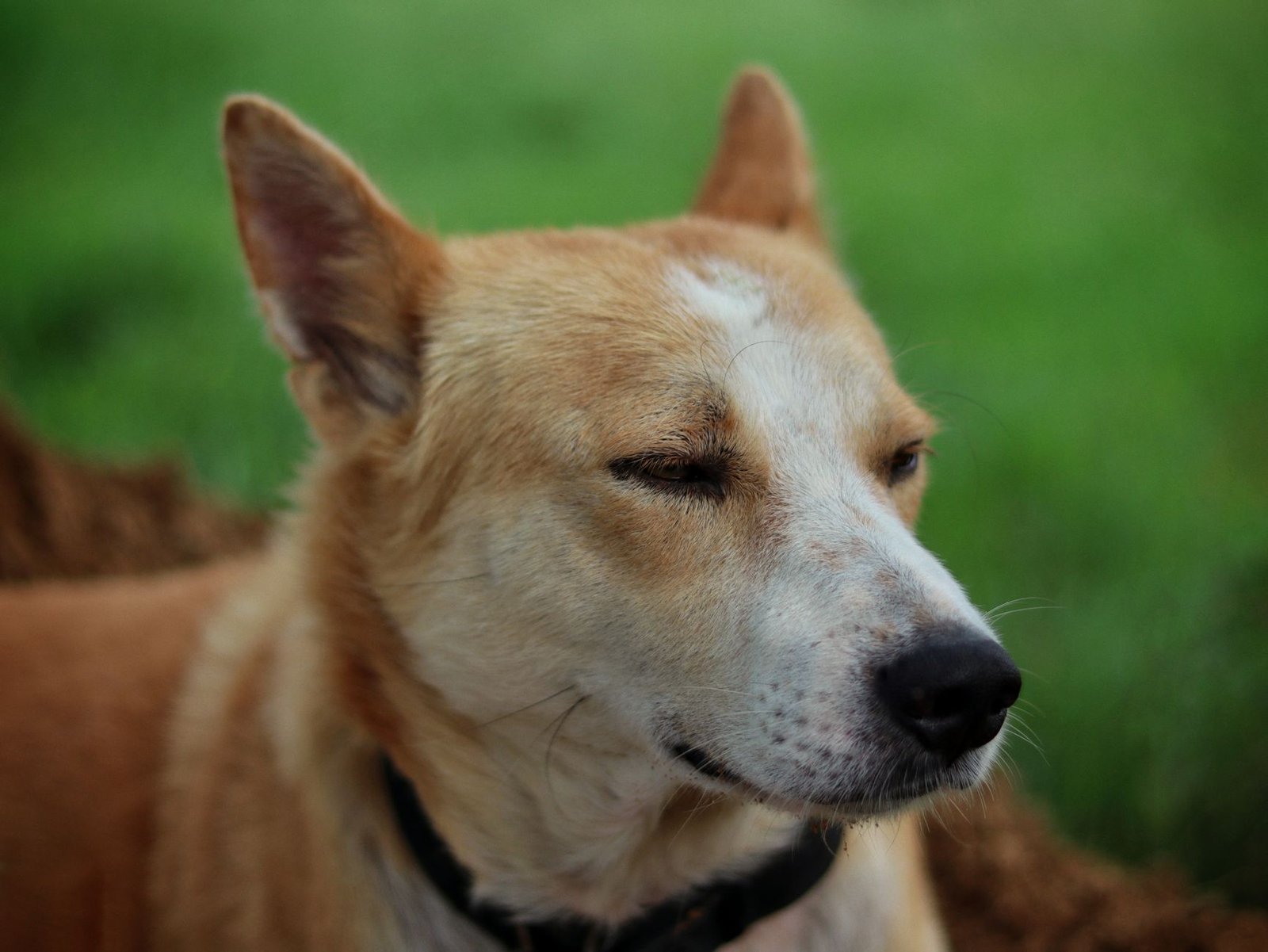
Eyes are the part of a pet where a day genuinely matters. The surface is thin, it has a rich nerve supply, and problems that start as irritation can become sight-threatening within twenty four to forty eight hours. If your dog or cat is holding an eye closed, phone the same day rather than watching it overnight.
Why eyes are different from most problems
Most things we look at can reasonably be watched for a day. Eyes cannot, for three reasons.
The cornea is about half a millimetre thick, thinner than a credit card, so damage progresses through it quickly. Pressure inside the eye can rise fast, and sustained high pressure does permanent damage to the nerve within a day. And a painful eye gets rubbed and scratched, which turns a small injury into a bigger one by bedtime.
The other complication is that several very different problems look almost identical from the sofa. A scratch, an infection, a foreign body, high pressure inside the eye and a problem originating elsewhere in the body can all produce a red, weepy, squinting eye. Sorting out which is which requires staining the surface, measuring the pressure and looking with magnification.
Signs that mean phone today
- Squinting, blinking rapidly, or an eye held partly or fully closed
- Pawing at the eye, or rubbing the face along furniture and carpet
- Redness, either on the white of the eye or in the surrounding tissue
- Discharge, especially thick, green or yellow
- Cloudiness, a blue or hazy look, or any change in clarity
- A visibly enlarged eye, or one that looks different in size from the other
- A pupil that does not match the other side
- Bumping into things, hesitating in dim light, or reluctance on stairs
- Any visible injury, or anything stuck on or in the eye
A quiet dog who is simply holding one eye shut is the presentation people most often leave until tomorrow, and it is the one we would most like to see today. Come through our urgent care and phone ahead so we know an eye is coming in.
What causes it around here
- Scratches and corneal ulcers, from branches on a trail, a cat’s claw, a rough game, or a dog with a face full of fur.
- Foreign material, including grass seeds, dirt and plant debris trapped under the third eyelid.
- Dry eye, where the eye does not make enough tears, producing a sticky discharge and repeated infections.
- Raised pressure inside the eye, which is intensely painful and one of the true same-hour emergencies, since sight can be lost quickly.
- Inflammation inside the eye, which sometimes points to a problem elsewhere in the body.
- Eyelid and lash problems, common in certain breeds, where hair rubs the surface constantly.
- Chemical and irritant exposure, from cleaning products to smoke.
Flat-faced breeds deserve a mention of their own. Shallow sockets and prominent eyes mean less protection, more exposure and a much higher chance of a scratch turning serious, so for those dogs the threshold for phoning should be lower still.
What not to do at home
This part matters as much as the signs.
- Never use leftover eye drops, including ones dispensed for another pet, another eye, or a previous problem. Some products are actively harmful when the surface is damaged, and this is one of the most common ways a simple ulcer becomes a serious one.
- Do not use human eye products, including redness-relieving drops and contact lens solution.
- Do not try to remove anything embedded in the eye.
- Do not let your pet rub. A cone from the cupboard, or a hand held gently in the way, buys you the drive in.
- Sterile saline, not contact lens solution, is the only thing worth using to flush an obvious irritant, and only if your pet tolerates it, and only while you head for the phone.
Examination is quick and painless. Fluorescein stain shows up damage on the surface, pressure measurement rules the dangerous pressures in or out, and our diagnostics team can look for the underlying causes when an eye problem is a symptom of something systemic.
Older pets and eyes
Cloudiness in an older dog is often a normal age change in the lens rather than anything harmful, and it usually appears in both eyes gradually, though only an examination can tell the two apart. What is not normal is a sudden change, a cloudy eye that is also red or painful, or an older pet who starts bumping into furniture and hesitating on stairs.
Sudden vision loss is an emergency even when the eye looks comfortable, because with some causes speed is what decides the outcome. Senior pets benefit from having their eyes checked as part of a wellness program visit, which our guide to caring for a senior dog or cat in Port Coquitlam covers alongside the rest.
Frequently asked questions
My dog’s eye is watering but he seems comfortable. Can I wait?
Watering alone with no squinting, redness or rubbing can be watched for a few hours. If it comes with any discomfort, or if it has not settled by the end of the day, book in. Eyes are the one area where the cost of an unnecessary visit is genuinely lower than the cost of waiting.
Can I use the drops we had left over from last time?
Please do not. Whether a product is safe depends entirely on what is wrong, and a common type of eye preparation makes a corneal ulcer significantly worse. Using leftovers is a frequent reason a straightforward problem becomes a complicated one.
What does a cloudy eye mean?
It depends on where the cloudiness is and how fast it appeared. Gradual haziness in both eyes of an older dog is often a benign lens change. Sudden cloudiness in one eye, particularly with redness or pain, needs same-day assessment.
My cat has a weepy eye and is sneezing. Is that the same thing?
Often it is part of an upper respiratory infection rather than a primary eye problem, which is common in cats and spreads in group settings. It still needs looking at, because some of those infections cause ulcers on the surface of the eye, and a cat who stops eating because they cannot smell needs help.
How urgent is a scratched eye really?
Urgent. Most surface scratches respond well when handled early, and a proportion of those left for several days become deep, infected or perforated. That difference is usually measured in days.
My flat-faced dog’s eye popped out after a scuffle. What do I do?
That is an immediate emergency. Lay a clean, damp cloth over the eye to keep it moist without pressing on it, stop your dog rubbing, and drive in while phoning ahead. Do not attempt to replace it yourself. If we are closed, go to the nearest open emergency hospital instead.
Speak to the team at Tricity Animal Hospital
If your dog or cat is squinting, rubbing an eye, or the eye looks red or cloudy, phone us today.
Published by the team at Tricity Animal Hospital.
This article is for general educational purposes only and is not a substitute for an in-person veterinary examination or advice about your individual pet. If you have an urgent concern about your pet, contact Tricity Animal Hospital or your nearest emergency veterinary hospital right away.
Tricity Animal Hospital
26-2755 Lougheed Hwy, Port Coquitlam, BC V3B 5Y9
Phone: (604) 942-2225
Email: info@tricityvet.ca
Hours: Monday to Friday 8:00 AM to 8:00 PM; Saturday 9:00 AM to 6:00 PM; Sunday 10:00 AM to 4:00 PM