
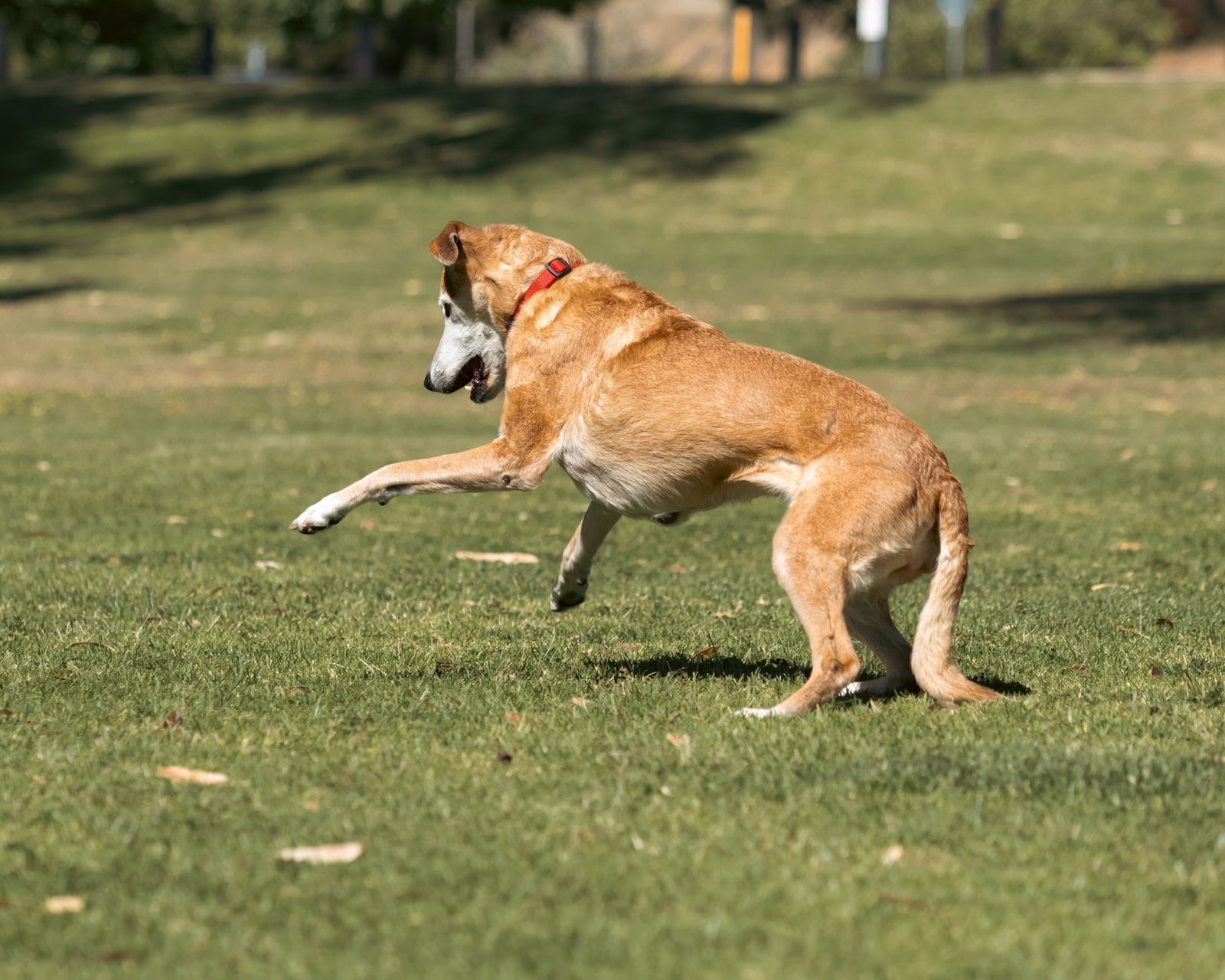
Quick answer: Vestibular disease is a disruption of the balance system that can cause a sudden head tilt, stumbling, circling and flicking eye movements in dogs and cats. It often looks like a stroke to owners but frequently traces back to the inner ear. Any sudden onset in a Port Coquitlam pet needs prompt veterinary assessment rather than waiting.
The Balance System You Never Think About Until It Fails
Standing still is not a passive act. Deep inside each ear sits a set of fluid-filled canals and sensors that report, moment by moment, which way is up and how fast the head is moving. Those reports travel along a nerve to the brainstem, where they are matched against what the eyes are seeing and what the legs are feeling. The result is the quiet competence you take for granted when your dog trots down a hallway or your cat lands on a windowsill.
Vestibular disease is what happens when that reporting line is interrupted. The sensors, the nerve or the part of the brain receiving the signal stops sending accurate information, and the body responds to the information it has. A pet whose balance system insists the room is rotating will lean, tilt, circle or fall toward the side that feels wrong. Nothing about the behaviour is confusion or stubbornness. It is an honest response to bad data.
The classic picture arrives without warning. An owner steps out to the driveway, comes back ten minutes later, and finds a dog who cannot hold a straight line, whose head is cocked hard to one side, and whose eyes are ticking rhythmically from side to side. That eye movement has a name, nystagmus, and it is one of the more unsettling things a pet owner can witness at home.
Peripheral or Central: Two Different Stories in Plain Language
Veterinarians sort these cases into two broad groups, and the distinction matters more than any other single question in the room.
Peripheral means the problem sits out at the edge of the system: the inner ear, the middle ear, or the balance nerve itself. This is the more common group. The pet is usually bright and aware, still recognizes you, and has normal strength in all four legs even though they cannot organize those legs into a straight walk.
Central means the problem sits in the brainstem or cerebellum, where the balance signal is processed. This group is less common and generally more serious, because that region also handles alertness, limb strength and several other nerves that control the face and swallowing.
What separates them on examination is not the head tilt, which both can produce. It is the company the tilt keeps: mental dullness, true weakness rather than clumsiness, a facial droop, difficulty swallowing, or eye movements that change direction depending on head position. These are findings, not something an owner can reliably sort out at home from a video, and we would rather look than guess.
What Sets It Off, Starting With the Ears
Ear disease is the trigger owners are most surprised by. An outer ear infection that has been simmering for months, especially in a dog who shakes their head and scratches, can extend inward past the eardrum and inflame the very structures that manage balance. This is one of the reasons we take recurring ear infections seriously rather than treating them as a nuisance, and why ear problems sit inside our medical services alongside allergy management, since allergies are so often the reason an ear keeps flaring in the first place.
Other contributors we consider include:
- Idiopathic vestibular disease, meaning no identifiable cause is found. It is seen most often in older dogs and can also affect cats.
- Inflammatory or infectious disease affecting the middle and inner ear or the nervous system.
- Trauma to the head or ear region.
- Blood pressure abnormalities and other metabolic changes.
- Growths or masses along the path of the balance system.
- Reactions to certain medicines, which is one more reason to bring your pet’s current medicine list to the appointment.
Age raises the odds without making this an inevitable part of getting older, and the same wellness monitoring that catches other age-related changes gives us useful baseline information when something sudden happens. Our guide to caring for a senior dog or cat in Port Coquitlam covers the routine that makes those baselines possible.
Why It Looks Far Worse Than It Often Turns Out to Be
Very few conditions frighten owners the way this one does, and the fear is reasonable. A pet who was fine at breakfast is now unable to stand, rolling toward one side, drooling, refusing food and sometimes vomiting. The word owners reach for is stroke. Some go further and start asking, in the first hour, whether it is time to say goodbye.
Here is the part worth holding onto. Strokes are recognized in dogs and cats, but they are not the usual explanation for this particular picture, and peripheral vestibular disease can look dramatic while affecting a system that has real capacity to compensate. The nausea and vomiting are motion sickness taken to an extreme, produced by a balance system reporting movement that is not happening. That is genuinely miserable and worth treating, but it is not the same thing as organ failure. If your pet is vomiting and you are trying to work out how urgent it is, our post on pancreatitis in Coquitlam dogs and cats is a useful companion read, because vomiting has a long list of possible sources and the surrounding signs are what point the way.
Please do not make an irreversible decision in the first few hours of an episode. Come in, let us examine your pet, and let the picture declare itself.
What Actually Happens During the Exam
Assessment begins with your account of the timeline. When did it start, what was your pet doing, has anything like it happened before, has there been head shaking or ear odour, what medicines are on board. That history genuinely shapes what we do next.
From there the examination is hands-on and unhurried: a full physical, a neurological assessment that tests strength, placement, reflexes and the nerves of the head, close attention to the direction and character of any eye movement, and a careful look down both ear canals. Depending on findings, our pet diagnostics team may add bloodwork, blood pressure monitoring, ear cytology to identify what is growing in an infected canal, and digital X-ray or ultrasound. If a deeper ear examination or imaging cannot be done comfortably while your pet is awake, sedation with full anaesthesia and patient monitoring keeps them still and safe. Where the findings point toward the central group, we will talk with you about referral for advanced imaging.
Supportive Care and What Recovery Can Look Like
Treatment depends entirely on cause. An inner ear infection is managed differently from an idiopathic episode, which is managed differently again from a central problem. What the groups share is a period where the pet needs help getting through the worst of it, and the specifics of that help come from your veterinarian rather than from a search bar. Anti-nausea support, fluid support and hospitalization for pets who cannot keep anything down are all decisions made case by case after an examination.
At home, your care team may talk with you about setting up a safe, confined space with soft footing, blocking access to stairs and pools, and helping your pet outside for toileting. Please follow the instructions written for your own pet, especially around eating and drinking, because a pet with poor balance and active nausea can be at risk of food or water going the wrong way.
As for the timeline, honesty is better than reassurance. Many pets steady noticeably over the first several days as the brain begins compensating, and a residual head tilt can linger long after the walking has improved, sometimes permanently, without troubling the pet at all. Some do not follow that pattern. We cannot promise a course or an outcome, and we would rather give you an honest expectation than a comfortable one.
When It Is a True Emergency, and What to Do on a Sunday
Treat any sudden loss of balance as a same-day concern. Move it to the front of the queue if you also see collapse, an inability to stand at all, seizure activity, a pet who seems dull or unaware of you, laboured breathing, repeated vomiting with nothing staying down, a known head injury, or signs that are clearly worsening hour over hour.
Our clinic on Lougheed Highway is open Monday through Friday from 8:00 AM to 8:00 PM with a doctor on duty from 10:00 AM to 6:00 PM, and Saturday from 9:00 AM to 6:00 PM with a doctor on duty from 10:00 AM to 5:00 PM. On Sunday we are open from 10:00 AM to 4:00 PM for retail and appointment booking only, with no doctor on duty, and we are closed on statutory holidays. Please call before you set out during doctor hours so the team can be ready when you arrive, and see our urgent care page for how we handle acute concerns.
Outside those doctor hours, on Sundays, and on statutory holidays, go directly to a 24-hour emergency veterinary hospital in the Tri-Cities or Metro Vancouver rather than waiting for us to open. It is worth knowing which one you would drive to before you ever need it, whether you are in Port Coquitlam, Coquitlam or Port Moody. That same instinct applies to other sudden presentations as well, including the one described in our post on dog bloat and GDV in Port Coquitlam, where minutes matter and hesitation is the real risk.
Frequently Asked Questions
Is a sudden head tilt always vestibular disease?
No. A head tilt points toward the balance system, but the reason behind it can range from an inner ear infection to inflammation, trauma, blood pressure changes or a problem in the brain. It can also be confused with a neck or pain-related posture. That is why examination comes before any conclusion about cause.
Can cats get vestibular disease too?
Yes. Cats can develop it at any age, and because cats hide illness so well, the first thing owners often notice is a cat who suddenly cannot judge a jump, is leaning against furniture, or is lying flat and unwilling to move. Cats also tend to be assessed later than dogs for exactly that reason.
Can an ear infection really cause balance problems?
It can. Infection or inflammation in the outer ear can extend into the middle and inner ear, where the balance structures sit. This is one of the practical arguments for having a persistent, smelly or itchy ear examined properly rather than managing it repeatedly at home, since ear cytology tells us what is actually present in the canal.
How long does a head tilt take to resolve?
There is no set timeline, and it depends heavily on the underlying cause. Many pets show improvement in coordination within the first several days while a mild tilt persists for weeks or longer. Some tilts never fully disappear and the pet adapts comfortably around it. We will not predict a specific recovery for your pet.
My dog’s eyes are flicking side to side. Should I go in now?
Yes, have your dog assessed promptly. Rhythmic eye movement alongside a tilt or stumbling is a meaningful finding, and the direction and pattern of that movement is genuinely useful information for the veterinarian. If you can safely record a short video before you travel, bring it, since the movement sometimes settles by the time you arrive.
What should I do if this starts on a Sunday or late at night?
Go to a 24-hour emergency veterinary hospital in the Tri-Cities or Metro Vancouver. We have no doctor on duty on Sundays and our doctor hours end before we close on other days, so a sudden balance crisis outside those windows should go straight to an emergency facility rather than waiting for our next open appointment.